Tracing Fund Flows Through Processor Chains for Gig Workers Filing Taxes on Irregular International Payouts
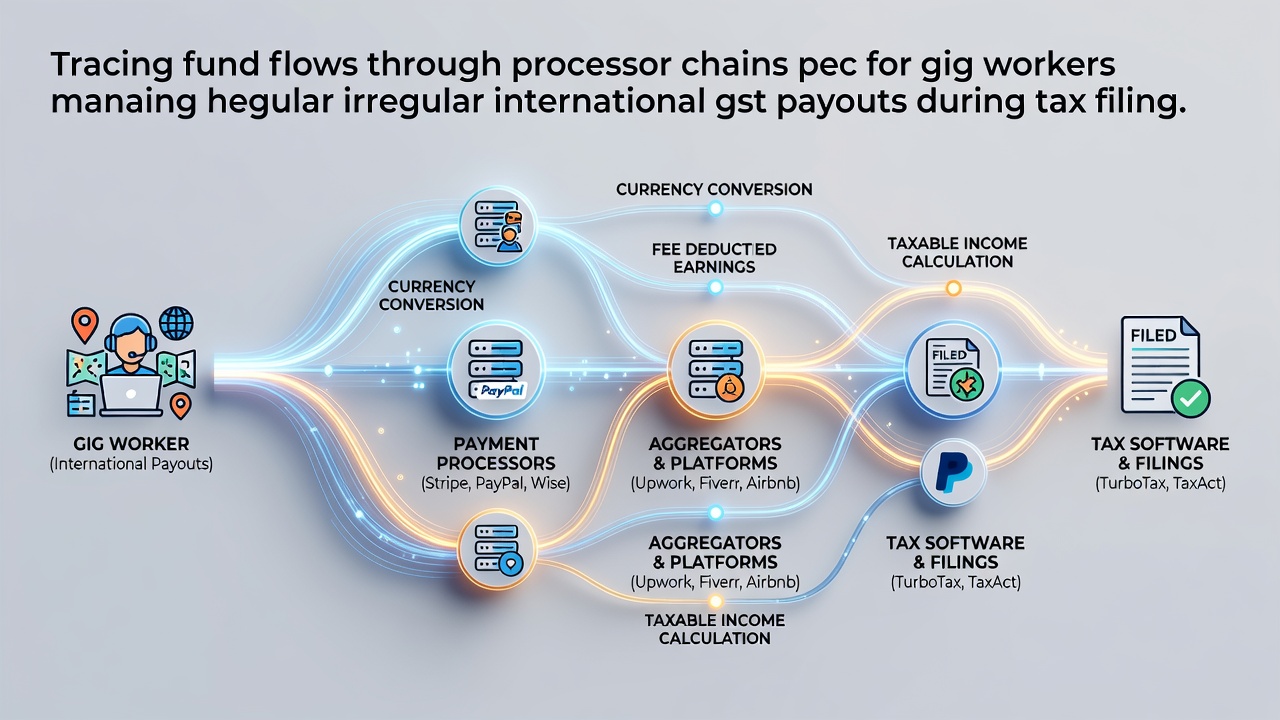
Gig workers handling international clients often receive payouts through layered payment processors that span multiple countries and currencies, which creates complex trails that must be followed when preparing tax returns. These chains typically start with a client payment into a platform account, then route through acquirers, gateways, and payout services before reaching the worker's bank or digital wallet, and each step records fees, exchange rates, and settlement dates that affect reported income.
How Processor Chains Operate in Cross-Border Gig Work
Payment flows begin when a client transfers funds to an aggregator or marketplace platform, after which the money moves to a primary processor that handles currency conversion and compliance checks before distribution. Intermediate processors may deduct platform fees, payment gateway charges, and foreign transaction costs while generating transaction identifiers that link each segment of the chain, and final payout processors deliver the net amount to the worker through bank transfers or e-wallets. Observers note that irregular timing of these transfers, often tied to project completion rather than fixed schedules, produces fragmented records that require matching across statements from different providers.
Impact of Irregular Payouts on Record Keeping
Irregular international payouts arrive at varying intervals and in different currencies, which means gig workers must reconcile multiple settlement reports to calculate gross income before deductions. Data from payment platforms indicates that exchange rate fluctuations between initiation and settlement dates can alter the taxable amount by several percentage points, while hidden fees at each processor layer reduce the final deposit without always appearing on the worker's primary statement. Those who've studied these patterns find that missing even one intermediary report leads to underreported income or overstated expenses during tax preparation.
Tax Reporting Requirements Across Jurisdictions
Tax authorities in multiple regions now require detailed tracing of funds received through digital channels, with the IRS Gig Economy Tax Center outlining how workers must report all gross payments before fees when filing U.S. returns. In Canada the Canada Revenue Agency applies similar rules for self-employed individuals receiving foreign-sourced income, demanding conversion to Canadian dollars at the Bank of Canada rate on the date of receipt. Australian Taxation Office guidance similarly requires inclusion of all platform and processor fees as deductible expenses only when supported by complete chain documentation. As of June 2026 updated information exchange agreements between these agencies have expanded automatic reporting of cross-border transfers above certain thresholds, forcing workers to maintain longer audit trails.
Workers often discover that processor statements alone do not capture the full chain, so they combine data from client invoices, platform dashboards, and bank records to reconstruct each transfer. Researchers have documented cases where mismatched currency conversions created discrepancies of several hundred dollars per transaction, which accumulated across dozens of irregular payouts and triggered notices from tax agencies.
Tools and Techniques for Reconstructing Fund Flows
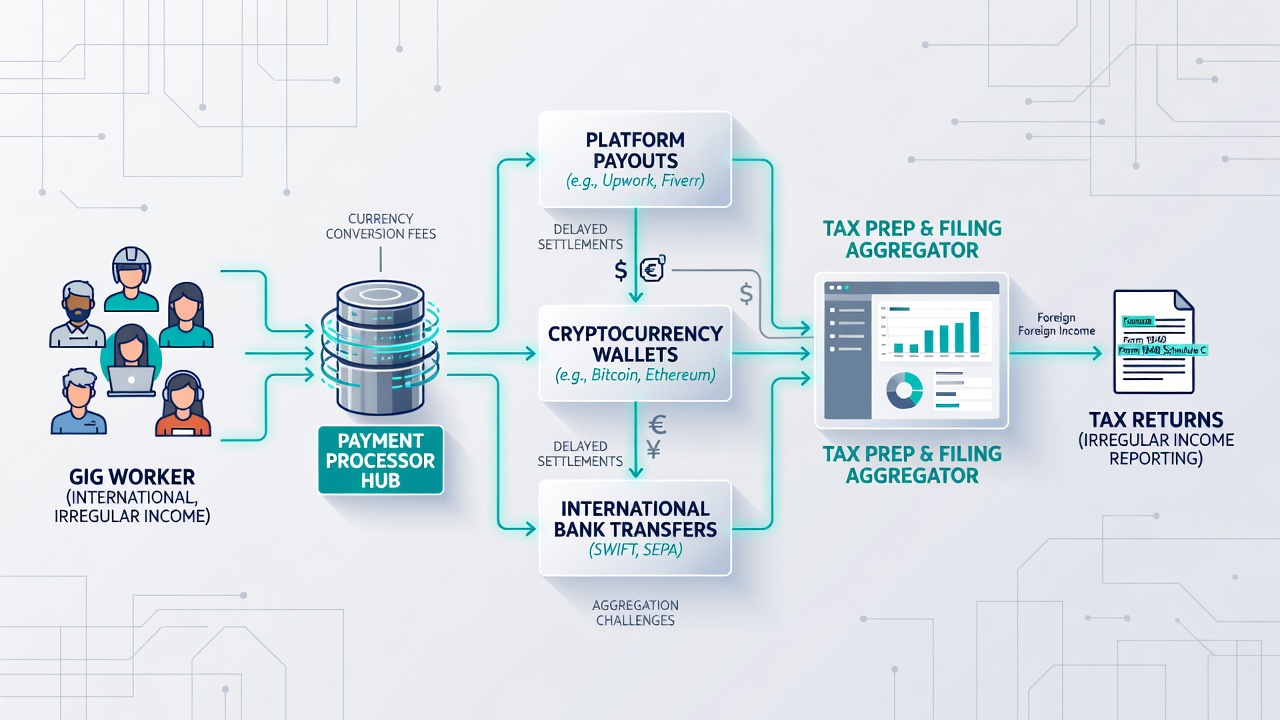
Spreadsheet templates that log each processor identifier, settlement date, gross amount, fee line items, and exchange rate allow systematic matching of incoming and outgoing records. Specialized accounting software imports CSV files from major gateways and flags unmatched transfers, while workers cross-reference these outputs against platform payout summaries. One study revealed that combining automated imports with manual review of intermediary statements reduced reconciliation time by nearly half for freelancers managing twenty or more international clients per quarter.
Payment processors increasingly provide downloadable reports that include unique transaction hashes or reference numbers, yet these identifiers sometimes change format between layers and require manual mapping. Those managing multiple platforms report success when they create a master ledger that records the originating client payment, every processor step, and the final deposit in a single row, which simplifies later verification against tax forms.
Common Pitfalls and Mitigation Steps
Failure to account for processor-level currency conversion fees leads some workers to report net rather than gross income, and tax agencies treat such omissions as underreporting regardless of intent. Another frequent issue arises when payout processors in one country send funds through correspondent banks in a second country before final delivery, creating duplicate or split entries that appear on different monthly statements. Mitigation involves requesting itemized fee breakdowns from each processor in the chain and retaining them for at least seven years in line with most statutory record-keeping periods.
Conclusion
Accurate tracing of fund flows through processor chains supplies the documentation needed for correct tax filings when gig workers receive irregular international payouts. Systematic logging of every intermediary step, combined with conversion at official rates and retention of supporting statements, produces teh records that satisfy reporting obligations across jurisdictions. Updated data-sharing agreements effective in June 2026 have increased visibility into these flows, making complete chain reconstruction a standard requirement rather than an optional practice for those filing returns on such income.