Split Settlement Protocols and Their Impact on Tax Compliance in Online Marketplace Ecosystems
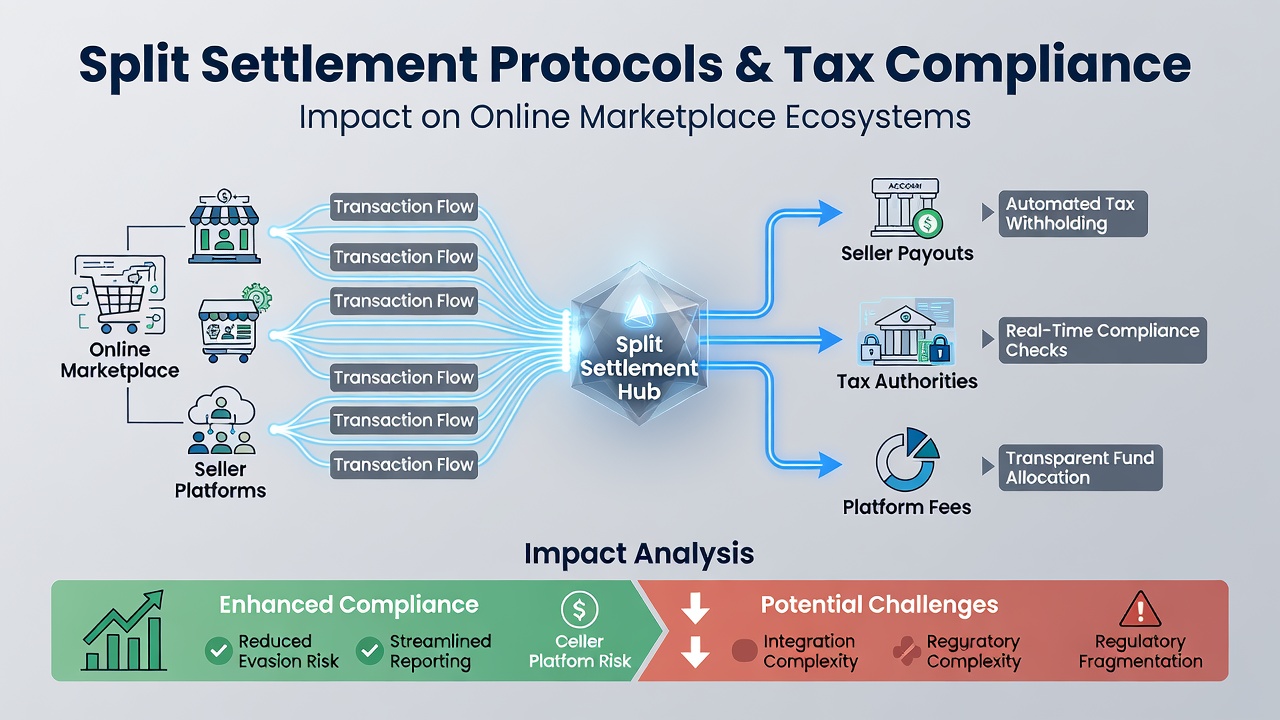
Online marketplaces rely on split settlement protocols to divide incoming payments among multiple parties including platform operators, individual sellers, service providers, and sometimes logistics partners, and these mechanisms directly shape how tax authorities track income and enforce reporting obligations across digital ecosystems. Platforms receive customer funds in a single transaction then allocate portions to each participant according to predefined rules, which creates layered transaction records that must align with tax codes in various jurisdictions.
Mechanics of Split Settlements in Digital Marketplaces
Payment processors execute these splits through automated rules engines that calculate shares based on commission structures, taxes, fees, and contractual terms before disbursing funds to separate accounts, and this process often occurs within seconds of the original purchase. Observers note that major platforms handle millions of such splits daily, generating detailed ledgers that platforms must retain for compliance audits. Researchers at academic institutions have documented how these protocols reduce manual reconciliation but increase the volume of reportable events that flow into tax systems.
Tax Reporting Obligations Triggered by Split Protocols
Tax authorities treat split settlements as distinct income events for each recipient, which means platforms must issue forms such as the IRS Form 1099-K for US sellers who exceed annual thresholds while simultaneously tracking their own platform fees as revenue. Data from regulatory filings shows that the number of information returns generated by marketplace operators rose sharply after 2023 updates to reporting rules, and similar expansions occurred in other regions including Canada and Australia. Platforms therefore integrate tax identification collection directly into seller onboarding workflows to ensure accurate attribution of each settlement portion.
Cross-Border Compliance Complexities
When marketplaces operate internationally, split settlements cross currency boundaries and tax regimes, requiring platforms to apply withholding rules, value-added tax allocations, and digital services taxes in real time. The European Commission maintains guidance on VAT treatment for platform-mediated supplies that affects how splits are documented for EU sellers, while Australian Taxation Office rules require marketplaces to report certain transactions under the Sharing Economy Reporting Regime. Those who manage multi-jurisdictional operations often maintain separate settlement ledgers segmented by seller location to satisfy local filing deadlines that may not align.
Platform Adaptations for Accurate Tax Attribution
Marketplace operators have deployed enhanced data pipelines that tag each settlement line item with tax identifiers, location codes, and product categories so that downstream reporting engines can generate jurisdiction-specific filings without manual intervention. Figures from industry reports reveal that platforms investing in these systems experienced fewer notices from tax agencies during the 2024-2025 period. Sellers receive itemized payout statements that break out gross sales, platform fees, and net transfers, giving them the documentation needed to reconcile their own tax returns against the information sent to authorities.
Enforcement Trends and Data Matching Initiatives
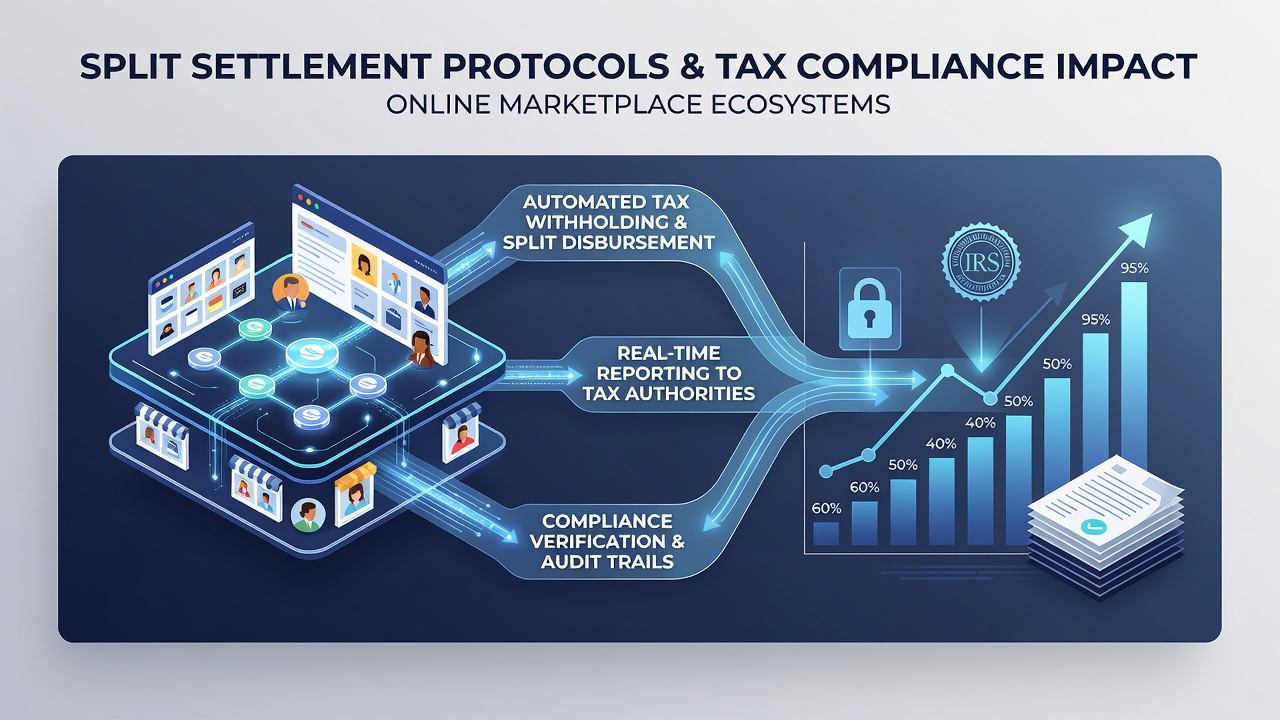
Tax agencies now receive bulk transaction data directly from payment processors and marketplaces, allowing automated matching against filed returns, and mismatches trigger inquiries that can involve both the platform and individual sellers. According to IRS publications on third-party settlement organizations, marketplaces must furnish detailed payment information even when splits involve multiple recipients, which has prompted many operators to upgrade their compliance teams and software integrations. Similar data-sharing arrangements exist under agreements coordinated by the OECD, enabling cross-border verification of income reported through split settlement flows.
Impact on Seller Behavior and Platform Design
Sellers operating within these ecosystems adjust pricing and payout preferences to manage cash flow around anticipated tax liabilities, while platforms introduce features such as automated tax reserve calculations within settlement dashboards. One study of North American marketplace participants indicated that clearer visibility into split breakdowns correlated with higher rates of timely quarterly estimated payments. Platforms also experiment with configurable settlement rules that let sellers designate separate accounts for tax reserves, thereby reducing the risk of underpayment penalties at filing time.
Developments Expected Around June 2026
Regulatory updates scheduled for mid-2026 in several jurisdictions will expand the scope of reportable split transactions to include smaller sellers and additional categories of digital services, which will require further refinements to existing protocol engines. Observers tracking legislative calendars note that both the US and EU are preparing expanded information return requirements that will increase the granularity of settlement data transmitted to tax authorities. Platforms that have already modularized their settlement systems anticipate smoother transitions compared with those still relying on legacy batch processing methods.
Conclusion
Split settlement protocols have become integral infrastructure within online marketplace ecosystems because they enable efficient multi-party payouts while generating the detailed records demanded by modern tax compliance regimes. As reporting thresholds tighten and data-matching capabilities advance through 2026, the accuracy of each settlement breakdown will determine whether platforms and sellers meet their obligations without additional friction. Continued investment in interoperable systems and standardized data formats will shape how these protocols evolve alongside changing regulatory expectations across regions.