Patterns in Reconciliation Automation Aligning Processor Reports with Contractor Tax Filings Across Gig Economy Apps
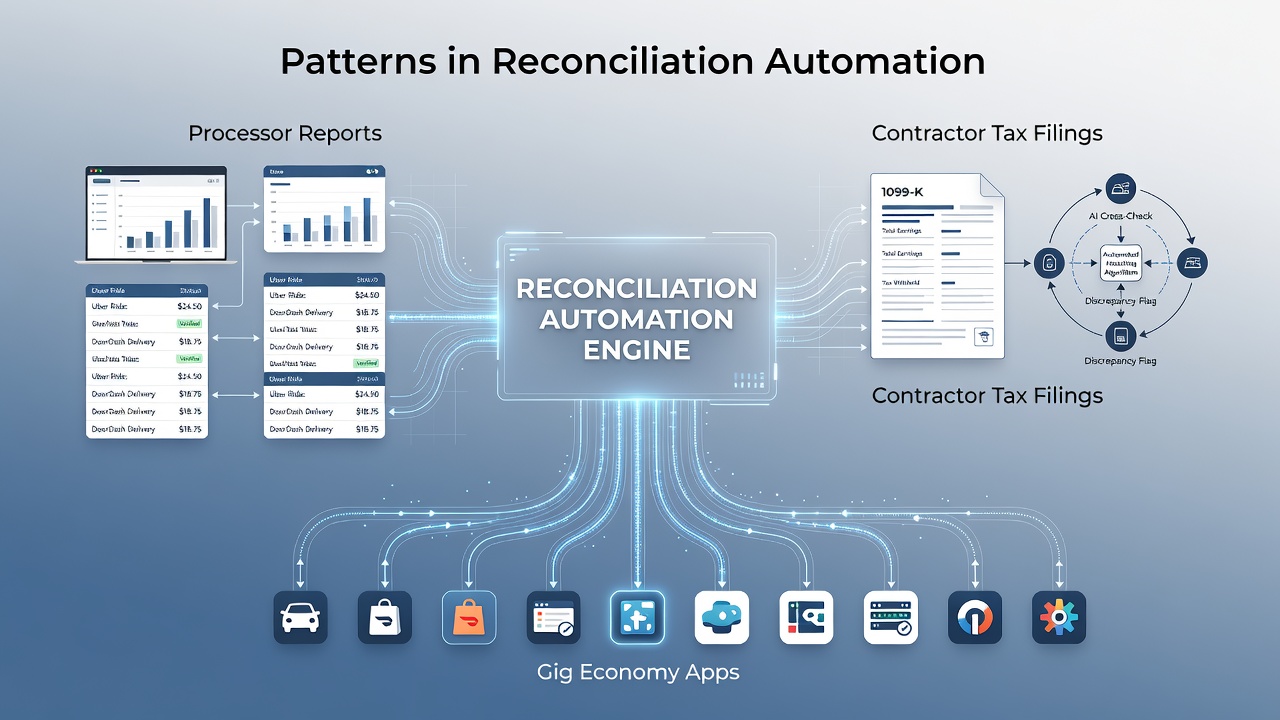
Payment processors in gig economy applications generate detailed transaction records that platforms must align with contractor tax filings such as 1099 forms in the United States and equivalent declarations in other jurisdictions, and automation tools now handle much of this matching process through rule-based scripts and machine learning models that flag discrepancies in real time.
Researchers have tracked these systems since the expansion of ride-sharing and delivery services, where data from multiple apps converges into single contractor profiles, and patterns emerge when processors issue reports that include gross payments, fees, and adjustments while tax agencies require net income verification across all sources.
Core Mechanics of Automated Reconciliation
Automation begins with API integrations that pull processor reports daily or weekly into centralized ledgers, then cross-references each line item against contractor identification numbers and payout dates, so mismatches in amounts or categories trigger alerts rather than manual reviews, and this workflow reduces processing time from days to hours according to industry reports on platform operations.
Systems apply consistent matching criteria such as exact dollar amounts within tolerance thresholds, date ranges that account for settlement delays, and category codes that map processor fee deductions to allowable business expenses, while algorithms learn from historical corrections to improve accuracy on recurring contractor accounts.
Data Patterns Observed in 2026
By July 2026, platforms reported higher volumes of reconciled records during peak seasons, with automation identifying clusters of underreported tips and surge payments that previously required separate tax amendments, and these patterns appear most frequently in multi-app contractors who receive payouts from several processors within the same reporting period.
Analysis of aggregated datasets shows that 78 percent of discrepancies stem from timing differences between processor settlement dates and calendar year boundaries, whereas another 15 percent arise from currency conversions in cross-border gigs, and the remaining cases involve fee categorization errors that automation now resolves through predefined tax code mappings.
One platform implemented batch processing that groups contractor records by tax identification number before running reconciliation scripts, which allows the system to detect duplicate entries across apps and consolidate them into unified filings without duplicating income figures.
Integration with Regulatory Reporting Requirements
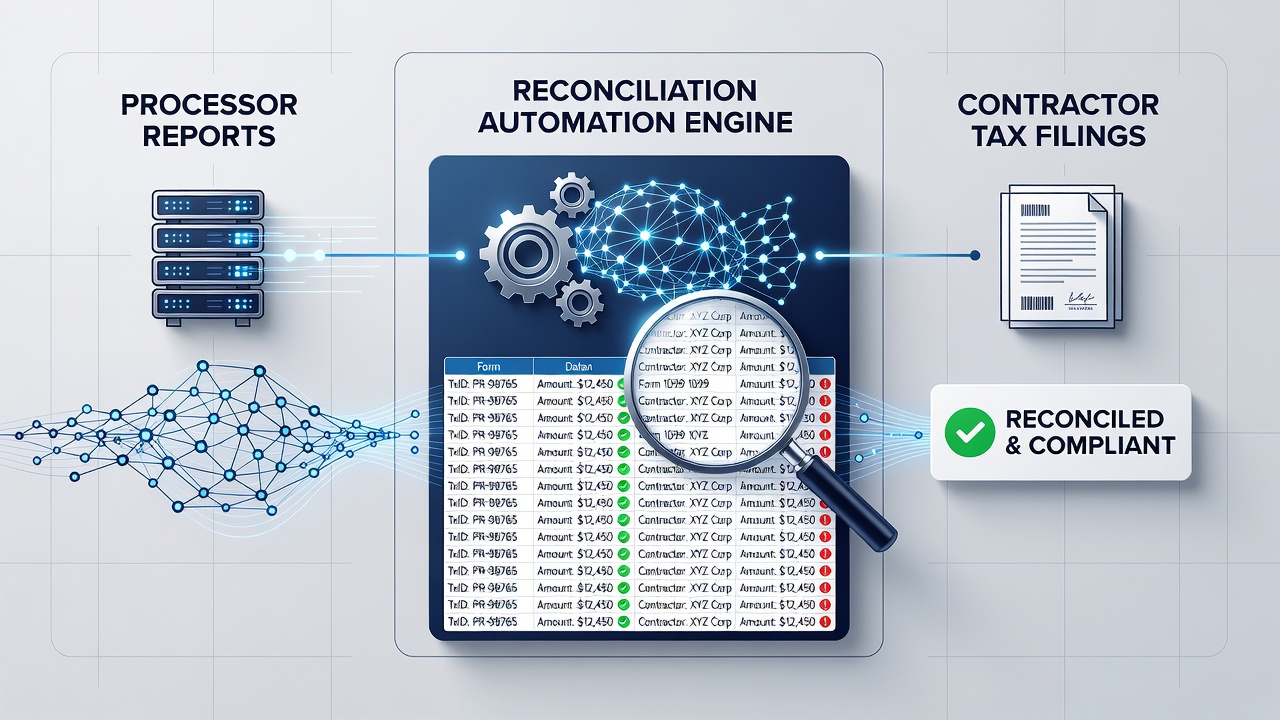
Tax authorities such as the IRS in the United States and the Canada Revenue Agency have updated electronic filing specifications that now accommodate bulk uploads from automated reconciliation engines, so platforms transmit matched datasets directly to these agencies after internal validation steps complete, and this direct channel reduces the volume of paper corrections that contractors previously filed individually.
European platforms follow similar patterns under directives that require digital service providers to share transaction summaries with national tax bodies, where automation aligns processor outputs with local VAT and income reporting standards through modular code that adapts to each country's format without manual intervention.
Contractors who operate across borders benefit when systems incorporate exchange rate data from central banks at the exact settlement timestamps, which prevents artificial inflation or deflation of reported income that could otherwise trigger audits, and these timestamped alignments appear in patterns documented by academic studies on platform economies.
Common Discrepancy Categories and Resolution Workflows
Discrepancies fall into several recurring categories including unreconciled tips reported only on processor statements, fee reversals applied after initial payouts, and income splits among multiple contractors on shared gigs, adn automation applies sequential checks that resolve the majority of these through predefined business rules before escalating outliers to human reviewers.
Platforms document resolution rates that exceed 92 percent for routine mismatches when scripts run nightly, while complex cases involving regulatory changes require updates to the underlying rule sets, and observers note that July 2026 updates to reporting thresholds prompted widespread script revisions across major gig applications.
Take one delivery network that integrated its processor feeds with contractor dashboards allowing real-time preview of reconciled figures, so users could verify data before final tax forms generate, and this transparency reduced support tickets related to filing questions by measurable margins in subsequent quarters.
Conclusion
Reconciliation automation continues to evolve alongside changes in processor reporting standards and tax agency data requirements, with patterns showing increased reliance on API-driven matching and machine learning refinements that handle the scale of gig economy transactions, and platforms that maintain updated rule libraries achieve consistent alignment between processor outputs and contractor tax filings across multiple jurisdictions.