Mapping Transaction Flow Architectures That Enable Instant Payouts in Creator Economy Ecosystems
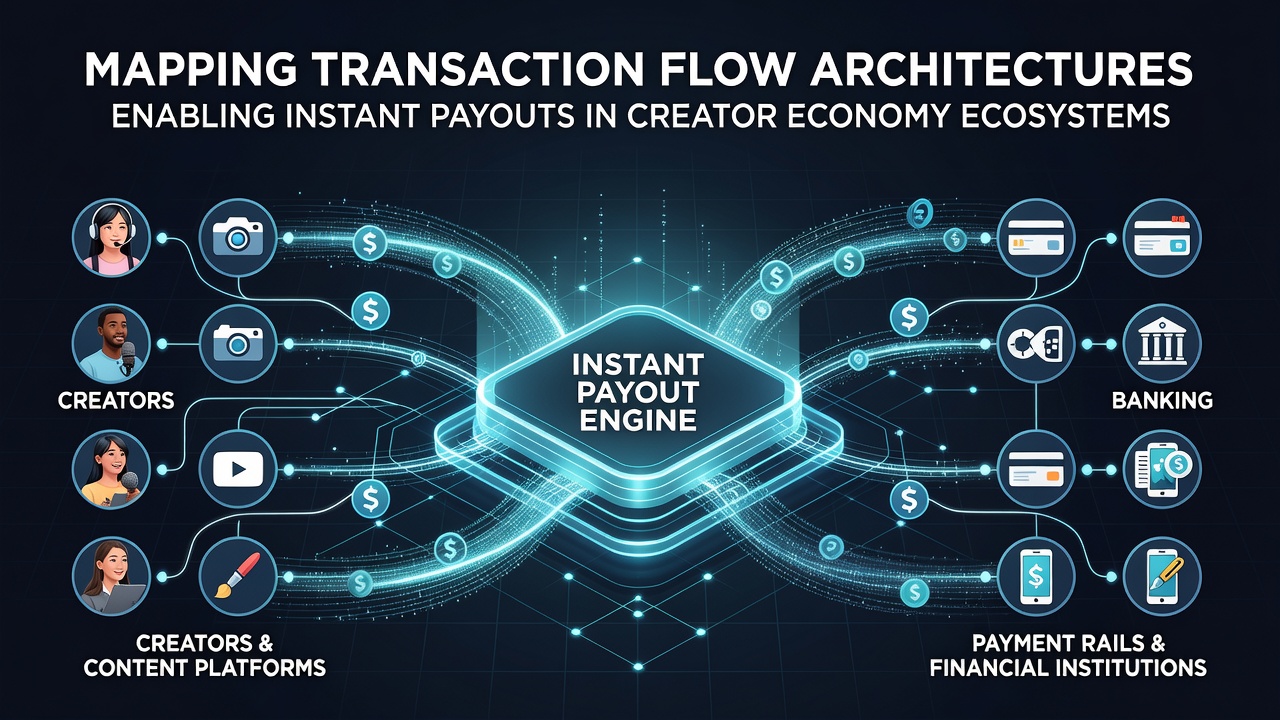
Creator platforms process fan contributions through layered transaction flows that route funds from source accounts to creator balances and onward to bank endpoints in minutes rather than days. These architectures rely on real-time payment rails such as the RTP network operated by The Clearing House and the Federal Reserve's FedNow service, which together handled over 2 billion transactions in the first half of 2026. Mapping begins at the platform ingestion layer where webhooks capture micro-payments, tokenization isolates card data, and initial authorization requests reach acquirers before funds are earmarked in an internal ledger.
Core Components of the Architecture
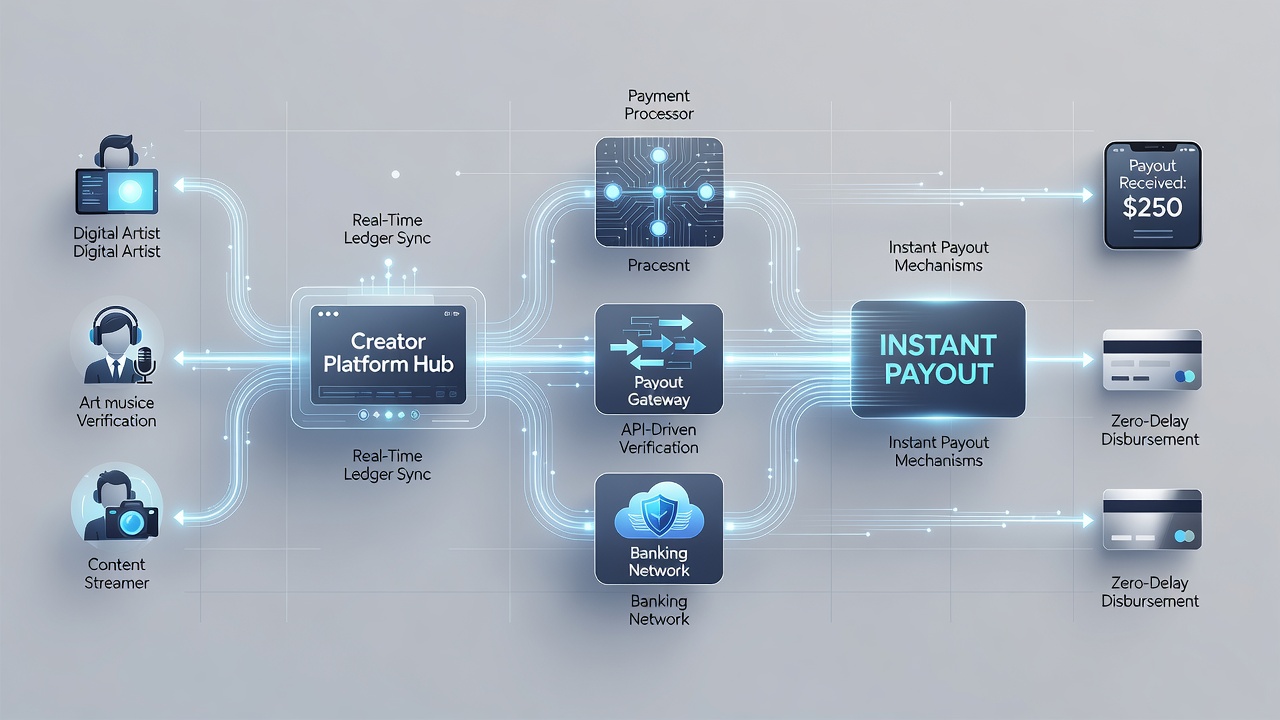
Three primary layers structure most instant payout systems. The ingestion layer accepts payments through APIs that normalize formats across credit cards, digital wallets and bank transfers while applying velocity checks and fraud scoring. The orchestration layer maintains a double-entry ledger that records credits to creator accounts simultaneously with debits from platform float accounts and then triggers settlement instructions to external rails. The disbursement layer connects directly to payment networks that support same-day or sub-second finality, including SEPA Instant Credit Transfer in Europe and the New Payments Platform in Australia.
Observers note that successful implementations separate the ledger from teh disbursement engine so that reconciliation occurs asynchronously while payout instructions execute in real time. This separation allows platforms to maintain compliance records without delaying creator access to funds. Data from the Bank for International Settlements indicates that jurisdictions with multiple competing instant rails achieve faster adoption rates among digital platforms because processors can route transactions to the lowest-cost or fastest-settling option.
Observed Flow Patterns in Production Systems
One common pattern routes funds through an aggregator that batches micro-transactions into larger settlement messages sent over instant rails every few minutes. The aggregator maintains a pre-funded account at the receiving bank so that individual creator payouts clear without waiting for upstream settlement. Another pattern uses open-banking APIs to initiate push payments directly from the platform's operating account to creator accounts, bypassing card networks entirely after the initial funding step. Research published by the University of Cambridge Judge Business School in early 2026 documented that platforms using direct push models reduced average payout latency from 26 hours to under 90 seconds while cutting processing fees by 18 percent on average.
Those who have examined production logs report that exception handling forms a critical branch in every architecture. When a payout instruction fails due to incorrect account details or regulatory holds, the system reverses the ledger entry, notifies the creator through the platform dashboard, and queues the amount for manual review. Automated retry logic attempts re-routing through alternate rails when primary networks report temporary outages. In July 2026 several major creator platforms updated their retry algorithms to incorporate machine-learning predictions of rail availability based on historical latency data.
Regulatory and Compliance Integration Points
Instant payout architectures embed compliance checkpoints at multiple stages. Know-your-customer data collected during creator onboarding feeds into transaction monitoring systems that flag unusual velocity or geographic mismatches before disbursement instructions are generated. Tax reporting modules calculate withholding requirements in real time and either deduct amounts or generate separate settlement entries to tax authorities. The Australian Taxation Office published updated guidance in mid-2026 clarifying that platforms using instant rails must still provide end-of-year summaries even when daily payouts occur, prompting several vendors to enhance their reporting APIs.
Cross-border creator ecosystems add another mapping dimension. Funds collected in one currency must be converted and routed through correspondent banking partners or multi-currency ledgers before final disbursement. Systems that maintain local currency float accounts in target jurisdictions achieve faster execution because conversion happens upstream rather than at the moment of payout. European platforms operating under the revised Payment Services Directive have documented lower failure rates when they pre-position liquidity in SEPA Instant participant banks.
Technical Synchronization Requirements
Real-time architectures demand tight synchronization between platform databases and external payment endpoints. Event-driven messaging queues propagate balance updates so that creator dashboards reflect available funds within seconds of a fan purchase. Idempotency keys attached to each payout instruction prevent duplicate transfers when network acknowledgments are delayed. Monitoring dashboards track metrics such as rail acceptance rates, average time to finality and exception volume, allowing operators to adjust routing logic dynamically.
Legacy accounting integrations remain a persistent mapping challenge. Many creator platforms export daily transaction files to enterprise resource planning systems that expect batch settlement records. Middleware translators convert real-time ledger events into the periodic formats required by accounting software while preserving audit trails that link each instant payout back to originating fan transactions. Organizations that have implemented these translators report that reconciliation cycles shortened from weekly to daily reviews without increasing staffing requirements.
Conclusion
Transaction flow architectures supporting instant payouts combine ingestion APIs, internal ledgers and direct connections to real-time payment rails while embedding compliance and reconciliation processes at each stage. Platforms that map these flows explicitly can route funds through multiple networks, handle exceptions automatically and maintain accurate records across jurisdictions. Continued expansion of instant payment systems in additional countries provides further options for reducing latency and cost in creator economy disbursements.