Ledger Reconciliation Techniques Across Fragmented Digital Transaction Channels for Independent Service Providers

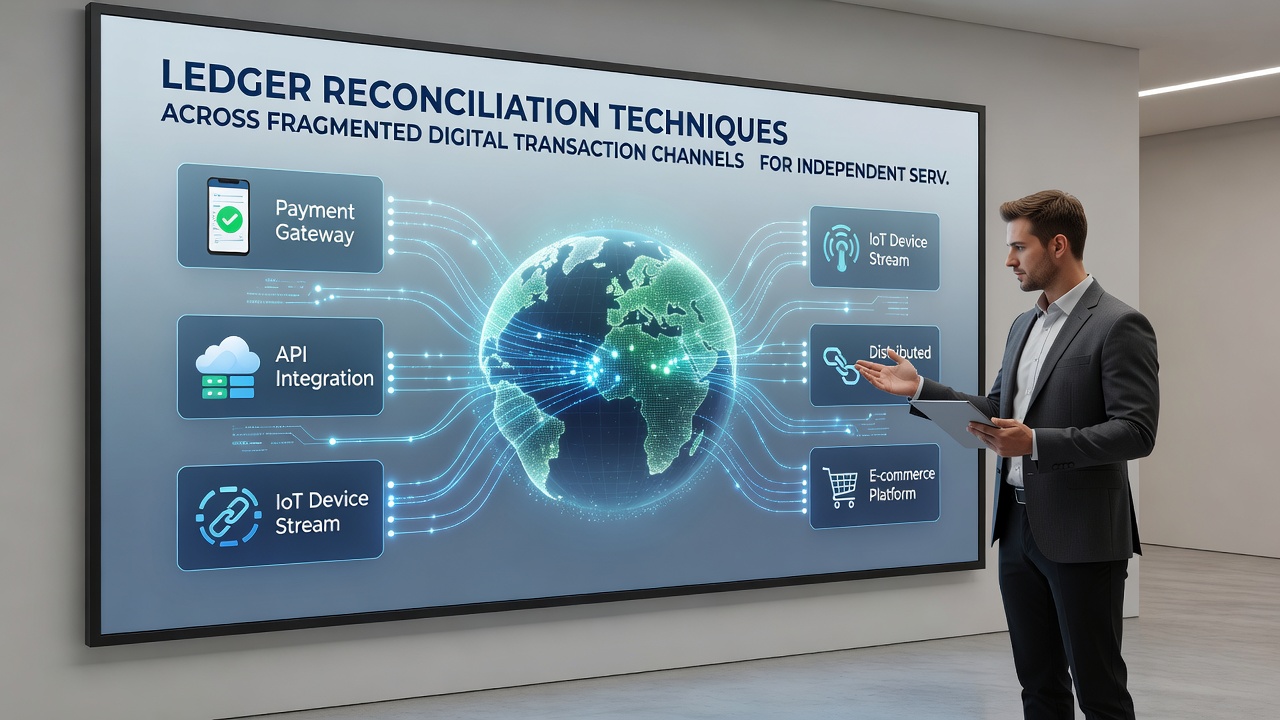
Independent service providers navigate payment ecosystems that span multiple processors, mobile wallets, and direct bank feeds, and this fragmentation demands precise ledger reconciliation methods that align incoming settlements with internal records. Data from payment networks shows transaction volumes across these channels increased steadily through mid-2026, with July figures highlighting a 17 percent rise in cross-platform activity compared to the prior year.
Core Challenges in Multi-Channel Environments
Fragmented channels create timing mismatches because one processor may settle funds within twenty-four hours while another holds batches for three business days, and observers note that currency conversions or regional fees compound these discrepancies. Researchers at academic institutions tracking payment data found that independent providers using five or more channels encounter an average of twelve unmatched entries per hundred transactions during peak periods.
Legacy accounting frameworks often lack direct API connections to newer digital gateways, which forces manual uploads that introduce human error. Studies from the European Central Bank indicate settlement failures linked to format mismatches reached 4.2 percent in 2025 samples drawn from small service businesses operating across EU member states.
Automated Matching Algorithms and Exception Handling
Providers deploy rule-based matching engines that compare transaction identifiers, amounts, and timestamps across ledgers, while machine-learning layers flag anomalies such as partial refunds or chargebacks that standard scripts overlook. One documented implementation by a Canadian fintech research group demonstrated a 68 percent reduction in daily review time when algorithms handled initial pairing before human intervention.
Three-way reconciliation remains standard practice, comparing processor reports against bank deposits and internal invoices simultaneously, and this method catches fee variances that pairwise checks miss. According to guidance issued by the Reserve Bank of Australia, consistent application of three-way processes lowered dispute resolution cycles from fourteen days to five in tested merchant cohorts during 2025.
API Integrations and Real-Time Data Flows
Modern reconciliation platforms pull data through standardized APIs that update every fifteen minutes rather than relying on end-of-day files, and this shift allows providers to identify shortfalls before they cascade into monthly closes. Integration layers map disparate data schemas from each channel into a unified format, which reduces the need for custom scripts that break during processor updates.
Batch processing still serves high-volume periods because real-time pulls can strain smaller accounting systems, yet hybrid models that combine both approaches appear in recent case studies from North American service networks. Those studies reveal that providers adopting scheduled API syncs plus overnight batches maintained 99.3 percent ledger accuracy across fragmented setups.
Regulatory Considerations and July 2026 Updates
Updated reporting requirements taking effect in July 2026 require independent providers to document reconciliation trails for transactions above certain thresholds, and these rules align with broader efforts by financial authorities to improve transparency in digital settlements. Compliance teams now embed audit logs directly into reconciliation software so that every adjustment carries a timestamp and user identifier.
Geographic variations add another layer because settlement rules differ between North American card networks and emerging instant-payment rails in Asia-Pacific regions, and providers managing cross-border work must maintain separate rule sets for each jurisdiction.
Conclusion
Ledger reconciliation across fragmented channels relies on layered techniques that combine algorithmic matching, API connectivity, and structured exception workflows, while regulatory timelines such as those scheduled for July 2026 continue to shape implementation priorities. Providers that align these methods with their specific channel mix achieve more consistent settlement accuracy without expanding manual oversight.