How Automated Ledger Matching Between Payment Networks and Tax Platforms Reduces Reporting Errors for Independent Sellers in Multi-Platform Ecosystems
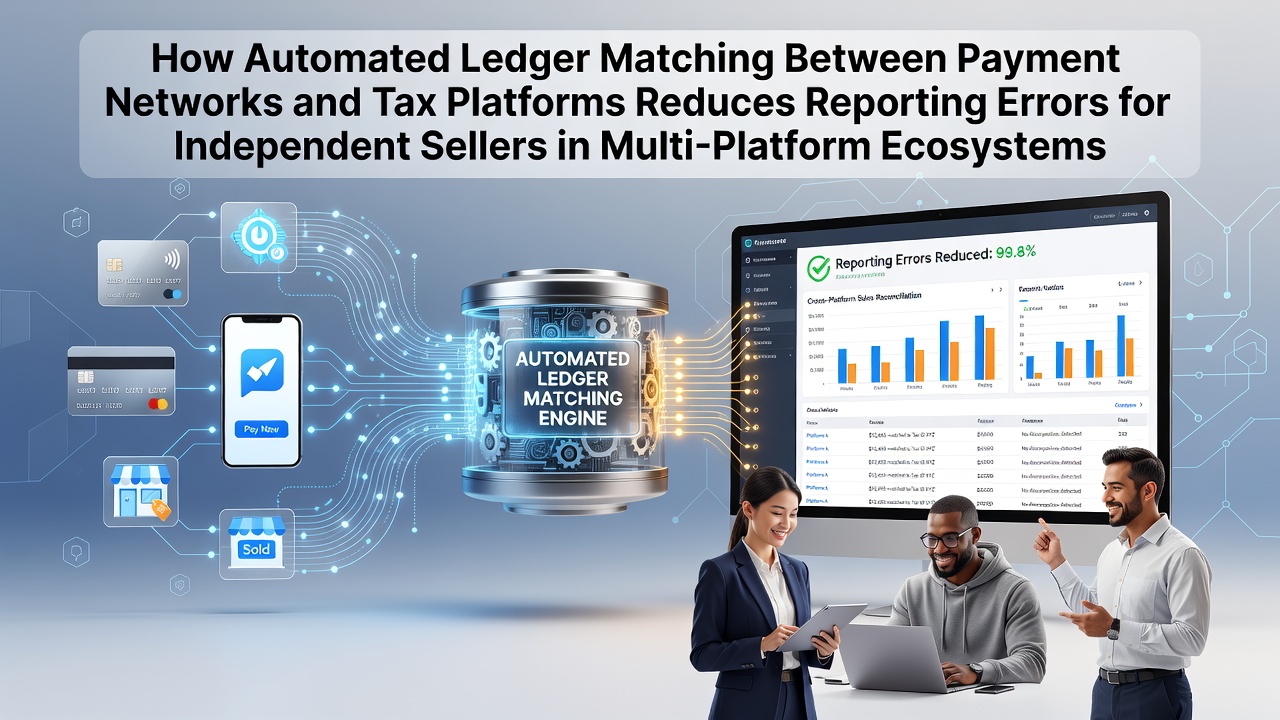
Independent sellers operating across multiple digital marketplaces face distinct reconciliation demands as transaction volumes rise and reporting requirements evolve. Payment networks capture raw transaction data while tax platforms handle jurisdiction-specific obligations, and automated ledger matching bridges these systems by aligning entries in real time.
Multi-Platform Transaction Flows and Common Discrepancies
Sellers list products on several sites simultaneously, which generates separate payment records from processors such as Stripe or PayPal alongside marketplace reports from platforms like Etsy and Amazon. Discrepancies appear when fees, refunds, or currency conversions are recorded differently across sources, and those differences often surface during quarterly or annual filings. Observers note that mismatched dates and categorization codes create the bulk of inconsistencies, particularly when one platform treats a transaction as completed while another lists it as pending.
Data from transaction audits show that manual cross-referencing consumes significant time for sellers who handle dozens of daily entries. Automated systems address this by ingesting feeds from each network and applying standardized matching rules that flag unmatched items within minutes rather than days. Researchers at academic institutions have documented reductions in variance rates once these rules are applied consistently across datasets.
Mechanics of Automated Ledger Matching
The process begins when payment networks export structured files containing transaction identifiers, amounts, timestamps, and fee breakdowns. Tax platforms receive these files through secure APIs and compare each record against their internal ledgers using unique reference keys. Matches receive confirmation codes, while unmatched entries trigger review queues that highlight potential omissions or duplicates.
Algorithms assign confidence scores based on amount proximity, date alignment, and merchant category codes, which allows high-confidence matches to post automatically. Lower-confidence items route to human review with suggested corrections drawn from historical patterns. This layered approach keeps the majority of entries moving without intervention while surfacing anomalies for further attention.
Integration Points with Tax Compliance Systems
Tax platforms such as Avalara and TaxJar connect directly to both payment processors and marketplace reporting APIs, pulling data into a unified environment where rules for sales tax, VAT, or income reporting apply automatically. When July 2026 updates to threshold reporting took effect in several jurisdictions, these integrations adjusted default settings to capture additional transaction types that previously fell below filing limits. Sellers receive pre-populated forms that reflect matched ledgers rather than raw aggregates, which minimizes transposition errors during submission.

According to IRS guidelines on third-party network transactions, accurate reconciliation supports proper issuance of information returns. Automated matching supplies the underlying detail that satisfies these requirements without requiring sellers to reconstruct ledgers manually each quarter.
Measured Reductions in Reporting Errors
Industry reports indicate that platforms employing automated ledger matching experience fewer amended filings and fewer notices from tax authorities. One study of multi-platform sellers found that variance between reported income and platform payouts dropped by more than half after implementation of matching protocols. The improvement stems from consistent application of matching criteria rather than reliance on individual judgment calls during data entry.
Canadian Revenue Agency documentation similarly emphasizes the value of source data alignment for GST/HST filers who operate across borders. Sellers using integrated systems report fewer instances of double-counted revenue or omitted refunds because the matching layer identifies these issues before submission deadlines arrive.
Practical Examples from Seller Operations
Take one seller who manages inventory across three marketplaces and receives daily payouts from two payment processors. Prior to automation, weekly reconciliation required hours of spreadsheet work and still left occasional mismatches that appeared during tax preparation. After connecting the networks to a tax platform, the same seller reviewed only flagged exceptions each week and submitted filings with supporting schedules generated automatically from matched records.
Another case involved a service provider receiving irregular payments through subscription tools adn gig economy apps. The automated system categorized each inflow according to platform-specific rules and aligned them with expense entries pulled from connected bank feeds, which produced cleaner profit-and-loss statements for quarterly estimates.
Conclusion
Automated ledger matching creates a reliable bridge between payment networks and tax platforms, allowing independent sellers to maintain consistent records across multiple ecosystems. As reporting rules continue to shift in July 2026 and beyond, the same infrastructure supports compliance by reducing the manual steps that historically introduced errors. Sellers gain clearer visibility into their transaction history while tax authorities receive filings grounded in reconciled data.