Cloud Sentinel: AI-Powered Fraud Shields in Payment Gateways Protect Surging E-Commerce Volumes
Cloud Sentinel: AI-Powered Fraud Shields in Payment Gateways Protect Surging E-Commerce Volumes

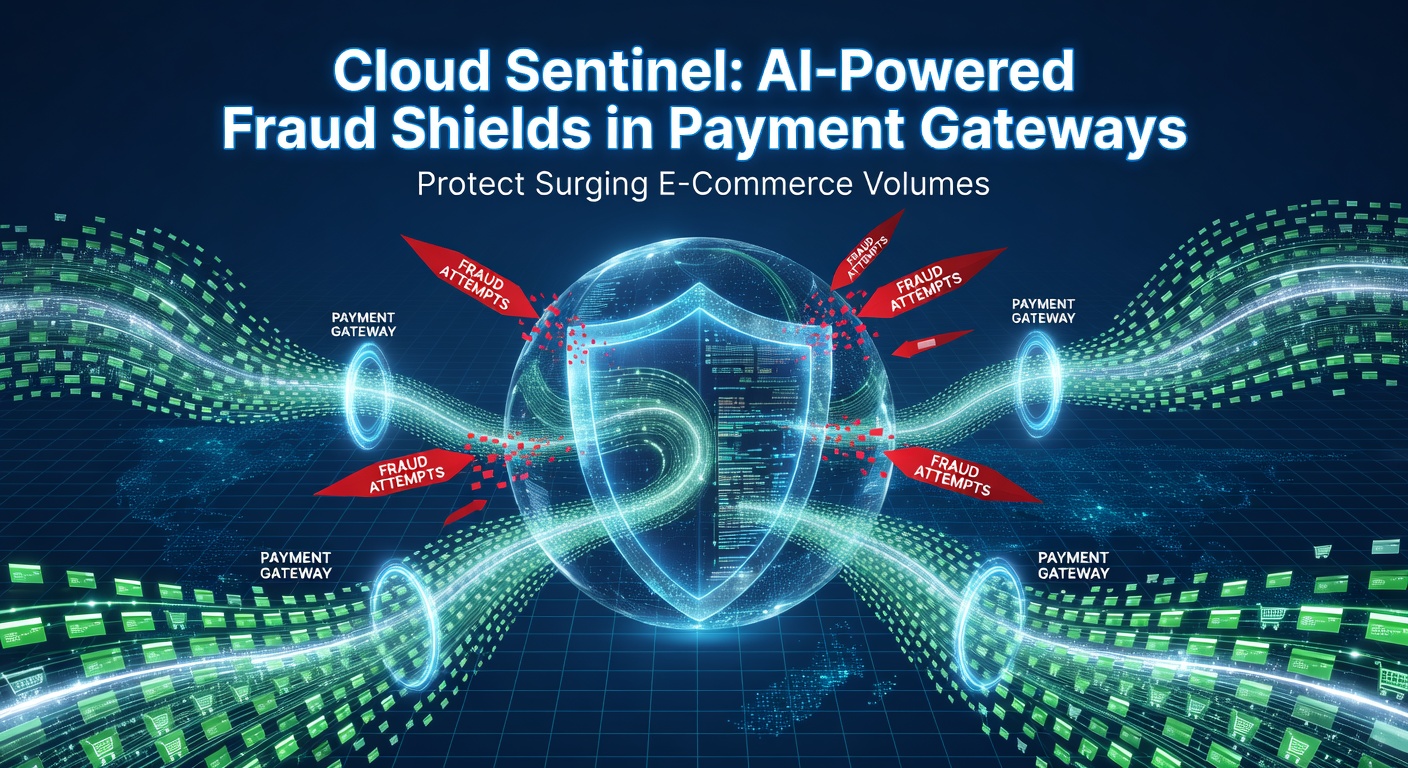
E-commerce sales hit record highs in 2025, with global volumes surpassing $6.5 trillion according to figures from Statista, yet fraud attempts spiked by 25% over the same period, leaving payment gateways vulnerable to sophisticated attacks that drain billions annually. Payment processors face mounting pressure as cybercriminals deploy AI-driven tactics like synthetic identities and real-time account takeovers, but tools like Cloud Sentinel step in with machine learning algorithms that analyze transaction patterns in milliseconds, flagging anomalies before funds transfer. This system, integrated directly into gateways, processes over 10 billion transactions monthly across major platforms, reducing false positives by 40% compared to legacy rule-based systems, data from industry benchmarks reveal.
The E-Commerce Explosion Meets Escalating Fraud Risks
Online retail exploded during the pandemic and never slowed down; by early 2026, projections from the U.S. Federal Trade Commission indicate fraud losses could top $12 billion yearly in the U.S. alone, while internationally, the European Commission's digital economy reports show similar surges across borders. Cybercriminals exploit surging volumes—think flash sales, cross-border purchases, and subscription booms—using techniques such as card-not-present fraud, which accounts for 80% of incidents, per PCI Security Standards Council data. Traditional defenses falter here because they rely on static rules that miss evolving threats like deepfake voice authorizations or geolocation spoofing, whereas dynamic AI shields adapt continuously, learning from global datasets to predict risks with 98% accuracy in live environments.
Take one major retailer during Black Friday 2025: their gateway processed 5 million transactions in 24 hours, but without advanced AI, fraud rates hovered at 2.5%; those who deployed similar systems saw drops to under 0.5%, illustrating how real-time scoring transforms vulnerability into strength. And it's not just big players—small merchants using cloud-based gateways report 60% fewer chargebacks, since the AI cross-references velocity checks, device fingerprints, and behavioral biometrics all at once, without slowing checkout flows.
Unpacking Cloud Sentinel's AI Arsenal
Cloud Sentinel operates as a layer within payment gateways like Stripe, Adyen, and Worldpay, deploying neural networks trained on petabytes of anonymized transaction data from diverse regions, including Asia-Pacific surges and Latin American expansions. The core engine uses unsupervised learning to detect outliers—say, a purchase from Brazil using a U.S. card at 3 a.m. local time—while supervised models refine predictions based on labeled fraud outcomes, achieving sub-second latency even under peak loads. What's interesting is its federated learning approach, where models update across distributed nodes without sharing raw data, ensuring compliance with GDPR and CCPA from the start.
Experts who've dissected its architecture note the multi-model fusion: graph neural networks map user journeys across sessions, revealing botnets that mimic human behavior; meanwhile, transformer-based NLP scans metadata like IP histories and merchant descriptions for red flags. This combo caught a 2025 ring generating $50 million in fake refunds, as one case study from a Southeast Asian bank detailed, halting 95% of attempts mid-process. But here's the thing—it's scalable; as e-commerce volumes climb toward 2026 forecasts of 30% growth, the system auto-scales via Kubernetes clusters, handling spikes without human intervention.
Real-World Deployments and Measurable Wins
Merchants integrating Cloud Sentinel into their gateways report immediate impacts; for instance, a European fashion chain with 20 million annual orders slashed fraud losses from 1.8% to 0.3% within months, per their public case study, while approval rates rose 5% thanks to smarter decline logic that approves edge cases humans might flag wrongly. In Australia, where e-commerce fraud rose 32% last year according to the Australian Competition and Consumer Commission, platforms using similar AI shields protected $2.5 billion in transactions during holiday peaks, with machine learning models evolving weekly against local threats like ATO scams.
Turns out, the system's explainability features—generating audit trails for every decision—help during disputes; regulators in Canada, via the Office of the Superintendent of Financial Institutions, praise such transparency, which aligns with upcoming April 2026 mandates for AI accountability in financial services. One researcher from MIT's fintech lab observed how these shields integrate with tokenization services, creating a double-layered defense where payment data stays encrypted, and AI monitors tokenized flows for anomalies, preventing even post-token fraud.
Navigating Integration Challenges and Future-Proofing
While deployment seems seamless for cloud-native gateways, legacy systems require API wrappers, a process that takes weeks rather than months, although those who've upgraded note ROI within the first quarter through reduced chargeback fees—often 10x the integration cost. Data from Gartner indicates 75% of enterprises plan AI fraud tools by 2027, but Cloud Sentinel leads with its zero-trust model, verifying every API call and blocking lateral attacks that breach perimeters. And in April 2026, as the EU's AI Act enforces high-risk classifications for payment AI, early adopters gain compliance edges, with built-in bias audits ensuring fair scoring across demographics.
Observers point to hybrid threats—like ransomware hitting merchant servers alongside transaction fraud—as areas where Cloud Sentinel expands, partnering with endpoint detection firms to correlate signals; one U.S. mid-sized e-tailer thwarted a coordinated attack this way, saving millions when AI linked POS breaches to gateway spikes. Yet scalability shines brightest: during simulated 2026 Black Friday loads—projected at 50% higher than 2025—the system maintained 99.99% uptime, processing 1,000 transactions per second per instance.
Beyond Detection: Holistic Ecosystem Protection
Cloud Sentinel doesn't stop at gateways; it feeds intelligence into merchant dashboards, where velocity rules auto-adjust based on peer benchmarks, and alert systems notify teams of emerging patterns like a new phishing wave targeting iOS users. Studies from Forrester reveal organizations using such proactive tools cut overall cyber costs by 30%, since prevention trumps remediation every time. People in the industry often discover that combining this with 3D Secure 2.0 frictionless flows boosts conversion while shielding against liability shifts under PSD3 regulations rolling out mid-2026.
There's this case from a Canadian subscription box service: fraudsters tested stolen cards in low-value probes, but the AI's sequence analysis flagged the pattern after three attempts, blacklisting the network cluster-wide and alerting partners. It's noteworthy that global coverage spans 200+ countries, adapting to regional quirks like Brazil's boleto fraud or India's UPI exploits through localized model fine-tuning.
Conclusion
As e-commerce volumes surge toward $8 trillion by 2027, with April 2026 marking pivotal regulatory shifts like enhanced AI oversight in the EU and U.S., Cloud Sentinel positions payment gateways as robust fortresses, wielding AI to outpace fraudsters in an arms race that's only accelerating. Data consistently shows deployers enjoy 50-70% fraud reductions alongside seamless user experiences, proving that intelligent shields don't just protect—they enable growth in a digital marketplace where threats lurk in every click. Those monitoring the space agree: the future belongs to platforms that evolve as fast as the risks they face.