Acquirer Failover Systems Enhance Transaction Approval Rates in Fast-Moving Payment Environments
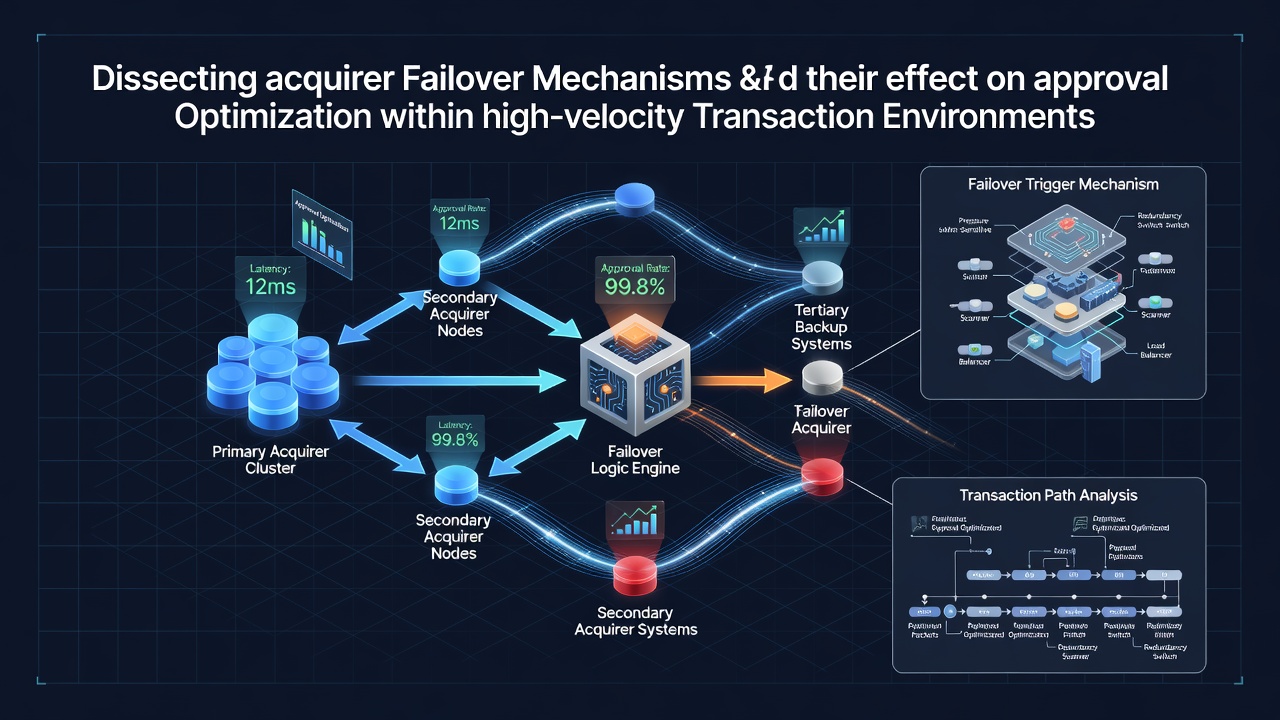 Payment processors rely on acquirer failover mechanisms to maintain steady approval flows when primary banking partners encounter outages or capacity limits, and these systems route transactions to secondary acquirers through predefined logic that monitors response times and error codes in real time. High-velocity environments such as subscription renewals or flash sales generate thousands of authorization requests per minute, so any delay from a single acquirer can trigger automatic declines that reduce overall success percentages. Observers note that failover protocols activate within milliseconds once thresholds for latency or connection failures get crossed, allowing merchants to preserve revenue streams without manual intervention. Researchers at payment networks have documented how these mechanisms operate through layered monitoring tools that track acquirer health across multiple regions, and the process involves continuous health checks combined with weighted routing rules that prioritize faster responders. When a primary acquirer shows signs of strain, the system shifts traffic seamlessly to backups that hold equivalent BIN ranges and settlement capabilities, which prevents the kind of cascading declines that occur during peak loads. Data from transaction logs reveal that optimized failover configurations can lift approval rates by double-digit margins in environments processing over ten thousand requests hourly, particularly when merchants integrate multiple acquiring banks with overlapping coverage.
Core Components of Failover Routing Logic
Acquirer failover depends on several interconnected elements that work together to detect issues and execute switches without interrupting the authorization sequence, and these include real-time telemetry feeds, decision engines, and fallback hierarchies established during merchant onboarding. The telemetry component collects metrics on response latency, timeout frequency, and specific decline codes such as issuer unavailable or network congestion, while the decision engine evaluates these signals against configurable thresholds before triggering a reroute. Payment platforms configure hierarchies so that traffic moves first to the fastest available backup and then to tertiary options if needed, ensuring continuity even during widespread regional disruptions.
Those who manage high-volume gateways often implement geographic distribution across acquirers located in different data centers, which reduces the risk that a localized outage affects all pathways simultaneously. Transaction identifiers carry metadata that lets downstream systems recognize rerouted requests and apply consistent fraud scoring and velocity checks, thereby avoiding duplicate processing or mismatched risk assessments. Figures from industry reports indicate that platforms using multi-acquirer setups with automated failover maintain approval consistency above 95 percent during simulated stress tests that replicate Black Friday traffic patterns.Impact on Approval Optimization Metrics
Approval optimization improves when failover mechanisms minimize the window during which transactions encounter unresponsive endpoints, and this translates directly into higher conversion percentages for merchants operating in competitive sectors. Studies from academic payment research groups show that each additional second of processing delay correlates with measurable drops in authorization success, so the speed of failover execution becomes a critical variable. Systems that complete the switch in under 200 milliseconds preserve the original timeout budget allocated by card networks, whereas slower handoffs push requests past issuer limits and produce soft declines that could have been avoided.
 Merchants track metrics such as time-to-first-response and overall approval percentage before and after failover activation, and these measurements help refine threshold settings for future events. Payment processors that publish performance data note that environments with mature failover logic experience fewer instances of acquirer-specific decline clusters, which in turn stabilizes cash flow forecasting for high-velocity operators. The ball stays in the merchant's court to supply accurate routing preferences during integration, yet the technical execution rests with the gateway provider that maintains the monitoring infrastructure.
Implementation Considerations Across Payment Ecosystems
Successful deployment requires careful alignment between merchant account configurations and acquirer capabilities, including matching supported card types and currencies so that rerouted transactions do not encounter unexpected rejections at the issuer level. Integration teams test failover paths through controlled simulations that mimic peak conditions without affecting live traffic, and these exercises uncover edge cases such as mismatched AVS responses or currency conversion discrepancies. Regulatory guidance from bodies like the Federal Reserve emphasizes the need for documented contingency procedures, while similar expectations appear in oversight frameworks issued by the Reserve Bank of Australia.
High-velocity operators frequently combine failover with dynamic load balancing that distributes traffic proportionally across healthy acquirers even under normal conditions, which reduces the shock when a full switch becomes necessary. Observers have recorded cases where platforms processing subscription billing cycles achieved more consistent daily approval curves after introducing such combined strategies, because the system avoids overloading any single connection point. Transaction volumes recorded in June 2026 across major gateways demonstrated that environments equipped with these layered controls sustained approval rates above baseline levels during unexpected acquirer maintenance windows.
Conclusion
Acquirer failover mechanisms form an essential layer of resilience that directly supports approval optimization goals in environments where transaction speed and volume intersect, and the effectiveness of these systems depends on precise configuration, ongoing monitoring, and coordinated testing. Payment platforms continue to refine detection thresholds and routing hierarchies as network demands evolve, which allows merchants to sustain higher authorization success without expanding their acquirer relationships indefinitely. The interplay between failover speed and decline reduction remains a measurable driver of operational efficiency across diverse merchant categories.